A Day in Angkor’s Historic Core
*To stand at a World Heritage site is to meet eternity —
where nature, culture, and human spirit converge.*

—
🖼️ Visual Introduction – Echoes of Civilization
♿ A Day In Angkor’s Historic Core
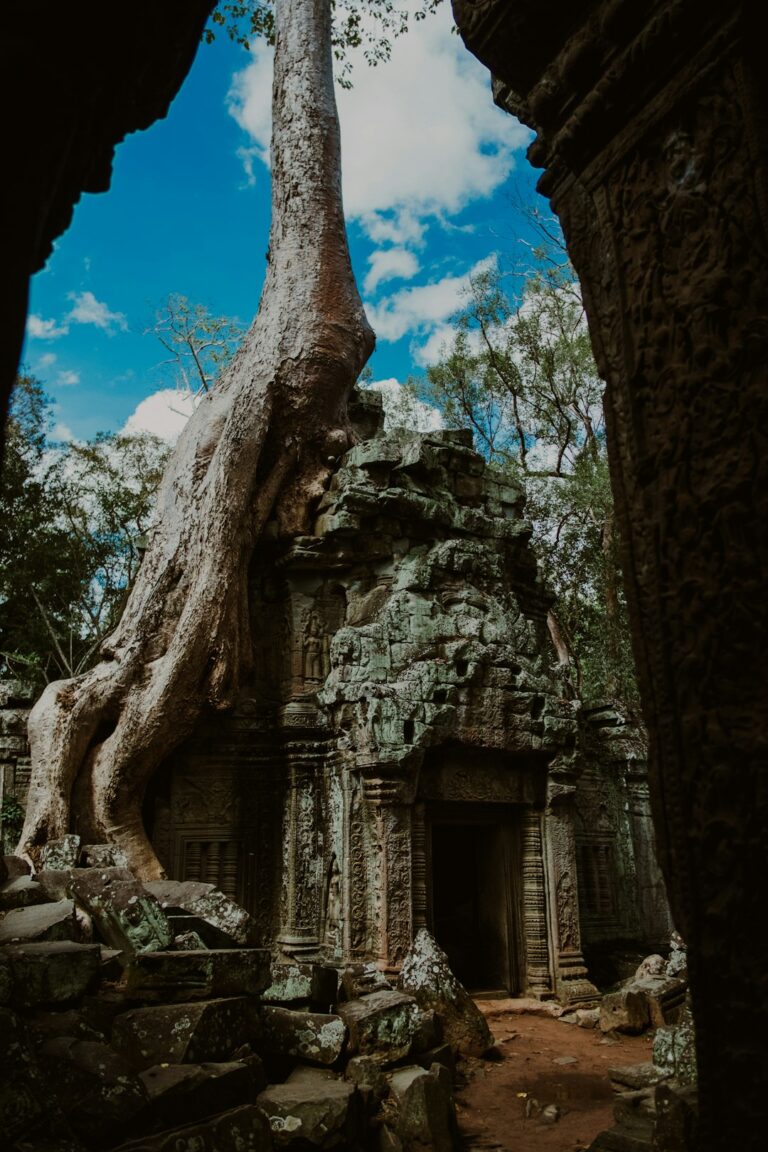
As dawn breaks over Angkor’s historic core, the soft golden light spills across the ancient stones of Angkor Wat, illuminating its intricate bas-reliefs that narrate tales of epic battles and divine myths. Visitors tread softly along the tree-lined paths, the air fragrant with the scent of frangipani and damp earth, a reminder of the lush jungle that envelops this UNESCO World Heritage site. A day here begins with the haunting sound of temple bells, drawing the curious to the majestic silhouette of the Bayon, where the serene faces of Avalokiteshvara watch over the bustling crowds. Travelers are encouraged to embrace a sustainable approach by wandering the less-trodden paths to Ta Prohm, where nature intertwines with history as giant silk-cotton trees embrace the crumbling ruins. Engaging with local guides not only enriches your understanding of the Khmer Empire’s architectural genius but also supports community-led conservation efforts. As the sun sets, casting a crimson glow over these storied stones, you’ll leave with a deep appreciation for the delicate balance between heritage preservation and environmental responsibility that defines this extraordinary corner of Cambodia.
💡 Angkor Date Built
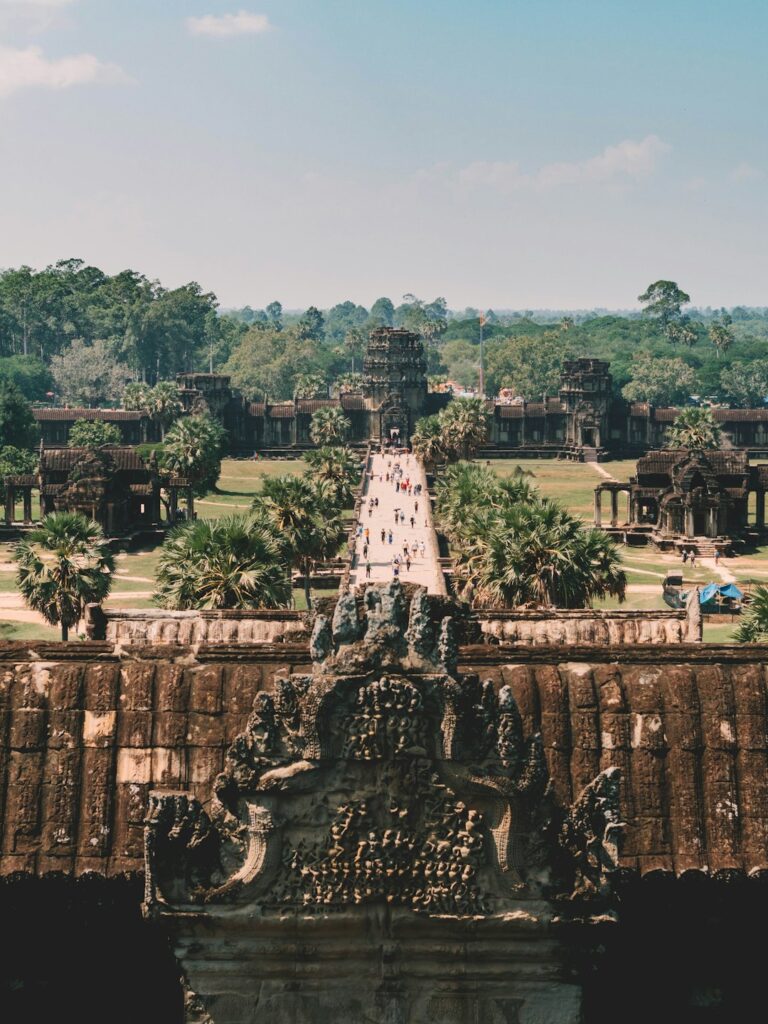
Angkor Wat, an architectural marvel and symbol of Cambodia’s rich heritage, was meticulously constructed during the early 12th century, under the reign of King Suryavarman II. This awe-inspiring temple complex, originally dedicated to the Hindu god Vishnu, spans over 162.6 hectares, making it the largest religious monument in the world. As you wander through its intricately carved stone corridors, the scent of earth mingles with the soft whispers of history, evoking a sense of reverence that permeates the air. The grandeur of its five lotus-like towers, rising majestically against the backdrop of a golden sunrise, captivates travelers and evokes deep admiration for the Khmer Empire’s ingenuity. However, the preservation of this UNESCO World Heritage Site is increasingly vital; sustainable tourism practices, such as guided visits at off-peak hours and respectful engagement with local culture, can help safeguard its legacy for future generations. As you explore Angkor Wat, allow the whispers of the past to resonate within you, fostering a connection that honors both the spiritual essence of this ancient site and the environmental stewardship needed to protect its enduring beauty.
🛍️ Nature & Culture Store
Amidst the ancient stone temples of Angkor, where the whispers of history echo through the towering trees and labyrinthine ruins, a simple yet poignant symbol of cultural appreciation emerges: the Angkor Wat t-shirt. Crafted with care, these garments serve not only as mementos of your journey through Cambodia’s UNESCO World Heritage site but also as a canvas for local artisans to showcase their craftsmanship. Each shirt, often adorned with intricate designs inspired by the motifs of the temple’s grand bas-reliefs, invites you to wear a piece of Angkor’s story while contributing to the local economy. As you stroll through the majestic corridors of the temple complex, the soft cotton against your skin feels like a gentle reminder of your connection to this sacred land. Opting for a t-shirt produced sustainably, perhaps from a cooperative that prioritizes environmental responsibility, allows travelers to leave a lighter footprint. In this way, your visit becomes not just a personal journey of exploration, but a step towards preserving the heritage and natural beauty of this awe-inspiring destination for generations to come.
🧭 Is Angkor Still Used?
Angkor Wat, an architectural marvel and the largest religious monument in the world, continues to resonate with spiritual significance and cultural heritage, drawing visitors into its embrace even centuries after its inception. Originally constructed in the early 12th century as a Hindu temple dedicated to the god Vishnu, this UNESCO World Heritage site has seamlessly transitioned to a Buddhist sanctuary, where monks and pilgrims still gather for prayer and meditation amidst its intricately carved sandstone walls. Walking through the temple complex, one is enveloped by the scents of incense mingling with the earthy aroma of ancient stone, while the soft murmur of chanting reverberates through the air, creating an atmosphere steeped in reverence. For travelers seeking to experience Angkor Wat in a meaningful way, visiting at dawn to witness the sun rise over its silhouette offers an ethereal moment of tranquility. However, it is crucial to approach this renowned site with respect and environmental mindfulness; sustainable tourism practices, such as minimizing waste and supporting local artisans, play a vital role in preserving this timeless treasure for future generations. As you stand before the majestic temple, you become part of a living tapestry that honors both history and nature.
> These stones remember.
> Every pillar, carving, and pathway holds whispers of devotion, artistry, and timeless wisdom.
🌍 Exploring a World Heritage Site – Walking Through Legacy
> Every UNESCO site tells humanity’s collective story — a bridge between what was and what still could be.
🚶 Guided Heritage Tours & Experiences – Step with Understanding

> Let expert guides unfold centuries before your eyes — stories of kings, builders, pilgrims, and dreamers.
🏛️ UNESCO Landmarks & Attractions – Where Spirit Meets Stone
> True monuments don’t only rise above us — they live within us.
> These places teach reverence, resilience, and remembrance.
🎥 Featured UNESCO Video – The Soul of a Civilization
🎥 Takeo province – Angkor Wat Tours – Tours of Cambodia – Phnom Penh Travel — Nature & Culture
> Watch history breathe — beauty, fragility, and faith interwoven in motion.
Stories From The Past – Echoes And Enlightenment
Hands move quickly and skillfully, weaving, carving, or painting. Each stroke or knot holds generations of knowledge. Watching, you realize that tradition lives not in museums, but in the people who keep creating.
“One who travels has stories to tell. – Ethiopian Proverb”
“The best education I have ever received was through travel. – Lisa Ling”
In Cuba, Coca-Cola is not sold legally.

> Heritage is not just about what remains — it’s about what we remember to carry forward.
> In honoring the past, we find our place in the present.
🏨 Staying Near the Heritage Site – Rest Where History Sleeps
> Choose accommodations that respect both heritage and harmony — a balance of comfort and conscience.
Reaching The Heritage Destination – Paths Of Pilgrimage
> Every journey to a sacred site is a quiet pilgrimage — even if made by plane.
📱 Stay Connected While Exploring – Memory Meets Modernity
> Connection lets us share these wonders — yet presence ensures we truly see them.
🛡️ Heritage Safety & Responsible Travel – Protecting What Endures
Avoid hitchhiking in unfamiliar areas.
> To travel here is a privilege.
> To travel responsibly is an act of preservation.
💳 Budgeting for a UNESCO Visit – Value Beyond Currency
Exchange leftover coins before leaving — many banks won’t convert them.
> The greatest investment is reverence — understanding the worth of what cannot be rebuilt.
🎒 Packing & Sustainable Travel – Care in Every Choice
Bring wet wipes for quick cleanups in transit.
Turn off lights, AC, and electronics when leaving your accommodation.
- Respect Wildlife: Avoid feeding animals or getting too close. Observe from a distance.
- Use Local Transport: Buses, trains, or tuk-tuks are not only budget-friendly but also a great way to experience daily life.
- Learn Basic Phrases: Knowing a few local words for greetings and thanks can open doors and show respect.
> Bring lightness and respect.
> Leave only footprints; take only perspective.
🎥 Heritage Vlog – Journeys Through Time
🎥 🇰🇭 [4K] Cambodia Nightlife – Siem Reap Night Scenes — Nature & Culture
🎥 Cultural Highlight – Living Traditions
🎥 Walking Around Angkor Wat Temple at Siem Reap Province — Nature & Culture
🎥 Scenic Walkthrough – Beauty Preserved
🎥 Cambodia – Land of spectacular ruins | Cinematic Travel — Nature & Culture
> The landscape itself becomes scripture — a sacred record of balance and belonging.
📸 UNESCO Heritage Gallery – Time Captured in Light
🎞️ Angkor-Wat Photo Gallery

📸 Photo by Thoeun Ratana

📸 Photo by Anthony Lim

📸 Photo by Camille Bismonte

📸 Photo by Hongbin

📸 Photo by Bill Weng

📸 Photo by Souris

📸 Photo by Siborey Sean

📸 Photo by Lidia Stawinska

📸 Photo by Khanh Nguyen

📸 Photo by Nicolas Spehler
🎥 Video Gallery – History in Motion
🎬 Cinematic Video Gallery
🎞️ Thailand is LOSING the information war to Cambodia
🎞️ How Is Siem Reap Now? 🇰🇭 (October 2022) | CAMBODIA Walking Tour
Unesco Heritage Faqs – Wisdom For Visitors
What apps are essential for travel?
Navigation (Google Maps), translation (Google Translate), ride-hailing (Uber/Grab), and booking apps for hotels and tours.
What is the safest way to carry money?
Use a mix of cards and cash, keep them in separate places, and consider a hidden money belt for crowded areas.
Do I need a visa for international travel?
Visa requirements depend on your nationality and destination. Check official government websites in advance.
📚 Related Guides – The Thread of Humanity
🌐 Explore More Destinations – Beyond Borders, Beyond Time
*May you walk gently among ruins that still breathe,
and remember — heritage is humanity’s shared heartbeat.*